
Yakima City Directory Shelves
The historical shelf starts with a transcribed North Yakima entry set from R. L. Polk & Co.'s 1888 Puget Sound Directory. Yakima Valley Libraries says its local run begins in 1904. The Washington State Library provides the longest exact year list, but those books are cataloged for on-site use rather than promised as digital copies. Gaps matter, so a missing year should stay blank in a research log.
| Collection | Years represented | Keeper | How to consult it |
|---|---|---|---|
| R. L. Polk & Co., North Yakima | 1888 | YVL-linked transcription and library or archive catalog | Free online finding aid; verify against an original when possible |
| Yakima local directory run | Begins 1904 | Yakima Central Library Special Collections | Appointment research in the Northwest Reading Room |
| Yakima directories and telephone books | 1908-1911, 1913, 1917-1925, 1927-1935, 1937-1941, 1951, 1953-1959, 1961-1962, 1964-1989, 1991-2012 | Washington State Library | Catalog and limited research appointment |
| North Yakima holdings | 1908-1911, 1913, 1917 | Washington State Library | Search the older place name as a separate title |
| Yakima County directories | Similar long run through 1991, with listed gaps | Washington State Library | Check coverage because valley communities may be included |
A separately titled local reverse or criss-cross run was not confirmed in the official sources. Ask the library catalog desk before naming one. Telephone-era books may still arrange material by address, but their exact format must be checked volume by volume.
North Yakima Directory Names
The oldest verified online lead uses North Yakima, not the modern city name. Search both forms in catalogs, newspapers, maps, and indexes. Do not merge them without noting which label the source printed. The 1888 transcription can reveal a name, occupation, employer, or business link even when an address is missing.
One transcribed line reads “Ackerman, Benjamin J, clerk MacLean & Reed.” It supplies a full name, job, and employer, but no street or page image. That is enough to seek a business listing or newspaper notice. It is not enough to claim a home address.
Open the North Yakima 1888 transcription shown in the captured research view.
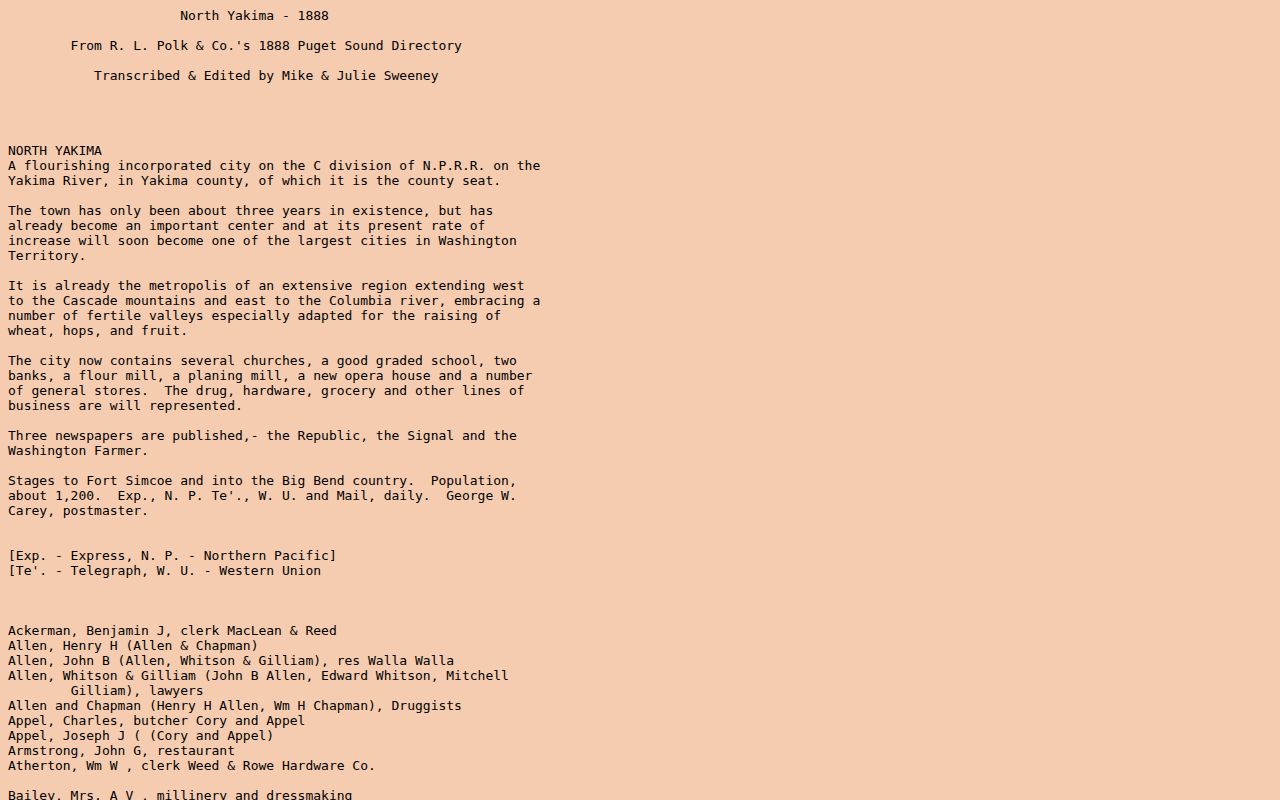
The screen is a finding aid for names and occupations. Verify an important entry against an original volume or image when one is available.
| Name | Benjamin J Ackerman |
|---|---|
| Occupation | Clerk |
| Employer | MacLean & Reed |
| Address | Not stated in the transcribed line |
| Source strength | Historical transcription requiring an original-source check |
Read Yakima Directory Entries
A city directory entry can be terse. Copy its wording before expanding an abbreviation. Record the title, year, page, exact name spelling, occupation, employer, street, number, and any spouse or household mark that actually appears. The 1888 example proves that some entries omit the address, so blank fields must remain blank.
- Criss-cross directory
- A later format arranged by street or phone number rather than only by surname. No separately titled Yakima run was verified.
- Householder index
- An address-order or household section that may help identify nearby listings when a volume contains one.
- Abbreviation key
- The book's own legend for short job, residence, spouse, or business marks. Read it before interpreting symbols.
- Transcription
- Text copied from an original source. It is a finding aid, not the page image itself.
Never assume a business address was a home. Likewise, a household line is not a deed. The recorded instrument and assessor record answer ownership questions, while the directory preserves what its publisher gathered at that date.
Yakima Library Research Desk
Yakima Valley Libraries Special Collections is the practical first stop for directories, local newspapers, school yearbooks, maps, atlases, genealogy sources, and the Relander Collection. The Northwest Reading Room at Yakima Central Library offers appointment-based access. A Book a Librarian request can help identify a title or reel before a visit.
Send a tight request: Yakima or North Yakima, the year range, surname, street, and whether the target is a household or business. That detail lets staff distinguish a city volume from a county book and a printed directory from microfilm. It also avoids asking for a broad search across unrelated holdings.
Here is the YVL Washington cities and counties collection page used to locate the local directory trail.
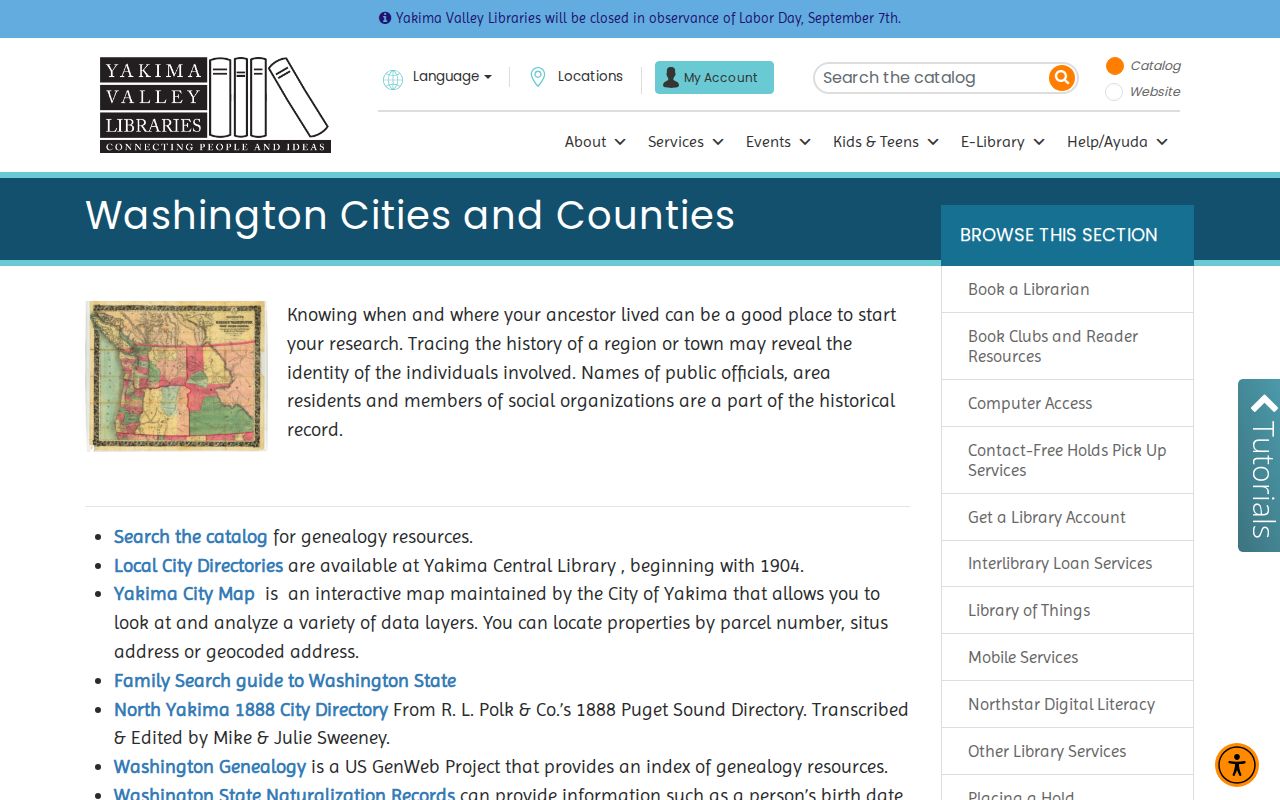
The captured page points researchers toward the North Yakima transcription and the local collection rather than presenting a complete resident roster.
Yakima State Library Runs
The Washington State Library's year list is the clearest way to plan a gap-aware city directory search. Regular public access closed effective July 1, 2025. The research page describes limited Thursday appointments from 1 to 4 p.m. and gives city directory and telephone-book catalog guidance. Confirm the current schedule before travel.
Keep North Yakima, Yakima city, and Yakima County holdings on separate log lines. A county-labeled book may include Ahtanum, Fort Simcoe, Grandview, Granger, Mabton, Moxee City, Naches, and other valley places. Its title is not an incorporated-city filter.
Yakima Museum Adds Context
The Sundquist Research Library and Archives at Yakima Valley Museum adds sources that explain a directory entry. Its reported holdings include about 12,000 photographs, 200 maps, 95 oral histories, bound Yakima Herald-Republic volumes from 1890 through 1952, business papers, clipping files, transportation records, and architectural drawings. Access is by appointment Tuesday through Friday.
Review the museum archive overview before asking about a surname, address, orchard, packing firm, railroad job, or building.
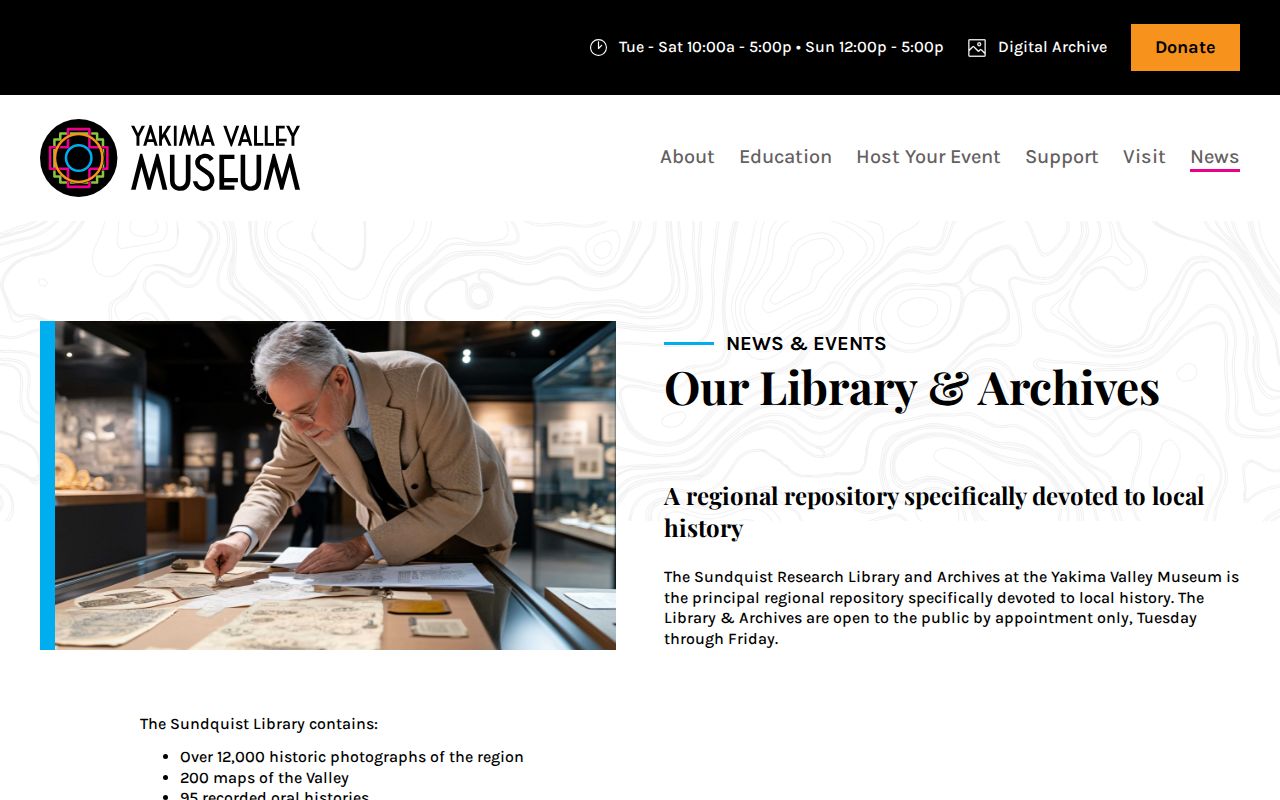
The museum collections can corroborate local work and business ties, but they should not be collapsed into a current personal profile.
Yakima Directory Year Ladder
A year ladder prevents researchers from drawing a smooth story across missing books. It also shows when a different source should take over.
| Point in time | Usable Yakima source | Research caution |
|---|---|---|
| 1888 | North Yakima transcription | Finding aid; some lines lack street data |
| 1904 onward | YVL local directory run | Request the exact title and year |
| 1908 onward | State Library listed runs | Respect every published gap |
| 1920 | Library of Congress Sanborn set | Shows blocks and buildings, not occupants |
| 1890-1952 | YVM bound newspapers | Use as dated corroboration |
The ladder is stronger than an assumed annual run. If no book survives for a target year, move to a census release, newspaper, deed, cemetery record, or archive request and label that change in source.
Map the 1920 Yakima Block
The verified Library of Congress Sanborn set contains 87 sheets. These maps show streets, building footprints, construction materials, stories, alleys, hydrants, and land use. First use the sheet index, then match a directory street to the correct block. The map may explain a warehouse, orchard business, alley, or changed building footprint.
Only the 1920 item is verified in the source set. Do not add other Yakima edition years without checking the Library of Congress collection.
Trace Yakima Families by Year
Follow one household through dated evidence. City directories fill some of the space between federal census years, while newspapers and vital indexes help explain a move, marriage, death, or name change.
- Choose an exact directory title and year, then search the surname and known variants.
- Copy the whole entry, including initials, job, employer, street, number, and page.
- Check the same street for nearby names or firms that can confirm the block.
- Move to the next available year, leaving listed gaps blank rather than guessing.
- Compare the line with census, marriage, death, cemetery, newspaper, or parcel evidence.
If a person vanishes, test North Yakima and Yakima, initials, maiden and married names, business sections, and nearby years. Disappearance can mean a move, death, omission, or an unheld volume. It does not prove any one event.
Request Yakima Archive Help
For county-created historical records, contact the Washington State Archives Central Regional Branch through Ask an Archivist. Simple retrieval requests generally have no charge, and the service can advise whether a request is feasible. Name the record series, place label, date range, and exact person or street.
Yakima's 1882 courthouse fire destroyed District Court records then held, so early case gaps may reflect record loss. Archive staff can distinguish a destroyed series from surviving civil, criminal, probate, or local-government material. That is more sound than treating a blank online search as proof that nothing happened.